
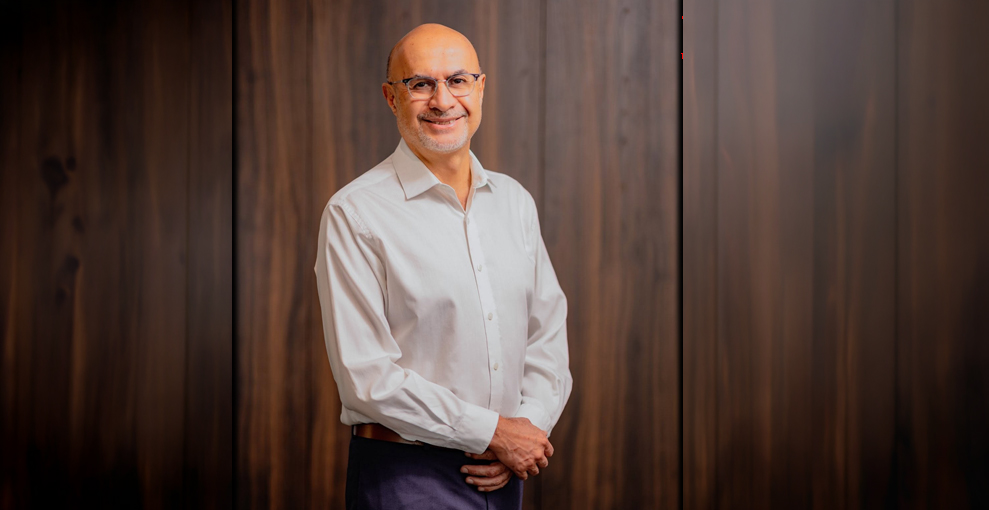
10 Jul Interview with Mr. José Luis Lupo, Minister, Ministry of Presidency, Bolivia
You have stated that Bolivia is viable and that the country has begun to stand up again. What has concretely changed for Bolivia to once again project itself confidently to the world today?
Bolivia has always been viable. Bolivia has mining, it has agriculture, it has five borders, it has human talent, it has lithium, it has a democratic culture that has demonstrated its ability to produce change in freedom and democracy, as shown by how the country managed to emerge from twenty years of authoritarian governments that threatened democracy and clearly harmed the economy.
The crisis we are experiencing today was not brought from elsewhere — we generated it ourselves due to poor economic policies, an unsustainable fiscal deficit, a tremendous trade deficit, and the belief that Bolivia would always live off the commodities supercycle, comfortably, without management, without doing anything. There was no exploration of oil or gas wells, no development of alternative energy, no attention paid to the energy matrix, which is now on the verge of collapse, and on top of that, spending continued as if the supercycle had never ended. In other words, what they did learn to do well was spend poorly. That was very clear.
Now, however, Bolivians voted for change, in peace, democracy and freedom and gave a very clear mandate to President Paz and to all of us on his team: we must get out of the crisis, we must achieve stability as the initial foundation upon which to rebuild Bolivia.
The structural way out of the crisis is by eliminating the fiscal deficit. The removal of fuel subsidies was not only an economic measure but also a political one, because it signaled to the public that things had changed and that we were willing to do what is right, even if it is difficult. At the same time, people assumed that this was the effort they had to make, when in reality it is only part of the effort, because we still have a long way to go to fully stabilize the economy. However, we are on the right path. The second phase, in order to truly eliminate the deficit, is to do everything necessary to reduce spending. But that is not enough, because spending is difficult to reduce, especially when you already have retirees, teachers, healthcare workers, police and armed forces. They cannot simply be dismissed; it is very rigid and difficult to reduce. Therefore, to eliminate the remaining deficit, we must increase revenues.
Increasing revenues means investment. There is no way to increase revenues without new investment and there will be no new investment without legal certainty. That is why we are now entering the second phase of government, focused on the country’s viability through structural reform. We need to make partial changes to the constitution to provide legal certainty. How can an investor who plans to invest hundreds of millions come to a country where arbitration is resolved only domestically? That needs to change. We must reform sector-specific laws: hydrocarbons, mining, evaporites, agriculture, the tax code, concessions, public-private partnerships (PPPs), the tax regime and the labor regime. Among the most important are those that provide legal certainty. This also includes the re-institutionalization of key institutions through proper appointments: the central bank, the comptroller’s office, Yacimientos, ANH, COMIBOL and others.
Updating or removing laws which protect workers’ rights or pensions’ financial security can be very divisive. How will this government make the necessary reforms without triggering anger or frustration among voters?
The law has always established that state apparatus should be made by Congress and this provides legal certainty to investors, alongside reforms that allow us to demonstrate that Bolivia is not only viable but also predictable. When people invest, there must be predictability. It must be a serious country, with legal certainty, with laws that protect investment and with long-term predictability. That is the phase we are now moving into. Today we are already beginning to work on the foundations of what needs to be addressed with the assembly, with social sectors, with business sectors and so on.
How do we do it? Drafting a law is not that difficult. Technically, a law can be written; there is comparative legislation, there are experts everywhere, international organizations support us and so on. The difficult part is implementation. A law that risks not being approved is a danger. There must be governability in the assembly and a law that is approved by the assembly but rejected by stakeholders is also a risk.Therefore, the process of socializing these reforms must involve social sectors, business sectors, the assembly and political parties, of course those with parliamentary representation, in order to build a shared vision for Bolivia. Fortunately, at this moment, aside from eight parliamentarians from previous regimes with a closed, statist, centralized, authoritarian vision from MAS who are in the assembly, we can say that we should be able to build a joint vision with the rest of the parties.
The government has promoted a reorganization of the Executive focused on efficiency and transparency. How does this redefine the role of the State in the economy and in building trust?
Under previous regimes there were two instruments used to plunder the country. The first was the fuel subsidy, which created interest groups that were absolutely corrupt, working with state entities to traffic that subsidy — one that the public ultimately did not receive, but rather these groups did. The second was the model they called import substitution industrialization, which consisted of creating public companies that were not viable, not feasible and that competed unfairly with the private sector in order to drain resources from the country. $7 billion were invested in public companies that are now bankrupt. They are bankrupt today and we must develop a full legal framework to resolve and reorganize the issue of public enterprises, so when we talk about the State, people have voted for a State that works, not for a large State. This is a large State that does not work because it has created mechanisms of extortion, overpricing, bureaucracy — everything needed to empower public officials over businesses and citizens.
Today, what we want is to transform that into public servants who have clear rules to act in a timely and proper manner, for example through the use of technology. Digitalization will allow a public official to become a servant, rather than saying, “this will be ready tomorrow.” No, sir — that is today and you have the obligation to deliver it to me. The State will no longer be able to request documents that it has already issued. How can it be that I issue an identity card and then ask for it again? If I issued it, then I already have it. The same applies to property registries and so on.
We have created a program here in the Ministry of the Presidency called the Center of Government. It relates to the delivery unit, to the implementation of presidential commitments, to debureaucratization, simplification of procedures and the reinstitutionalization of the country, referring to appointments made by the assembly in key positions, as the law requires. This is the State that will function. It is small, agile and at the service of the citizens and it will gradually become decentralized..
What is the ultimate goal of all this? To provide good service to citizens: education, healthcare and security. These are services that are a right of citizens and a large State only generates distortions, higher costs and wastes people’s time. That is the State reform program being led here at the Ministry of the Presidency and tomorrow the decree called “Tranca Cero” will be approved.
The Ministry of the Presidency has taken on a central role in coordinating the government. How does this structure help align priorities and accelerate the implementation of reforms?
The Ministry of the Presidency is the only transversal ministry; it is essentially the President’s ministry. As such, the initial reorganization brought in many areas that were not previously part of it, such as transparency, justice, equal opportunity and others, which are important branches of this reform. At the same time, we removed all operational functions from the ministry.
Previously, this ministry functioned like a large public works office for the president, tied to what was called “Bolivia Cambia, Evo Cumple” — it involved going around the country building small sports fields and similar projects. We now focus only on the oversight of public enterprises, where we will implement these measures and we are now fully dedicated to the transversal role — working with sectoral ministries, which are responsible for drafting and implementing laws.
The Ministry of the Presidency is responsible for coordinating approval and implementation, but strictly in a coordination capacity. So that is the real role of a Ministry of the Presidency, which we are restoring: a smaller structure, focused on strategic issues, providing the President of the Republic with a control dashboard to organize his team and achieve results on time and in proper form. The president has defined it clearly and I think this relates to a common question people ask about the ideological orientation of this government. Ideology does not feed people. We are a pragmatic government, oriented toward results, seeking efficiency and transparency in management. In other words, there is no corruption, there are results. We are accountable to society because that is why we have been placed in our positions, but above all, we are pragmatic in order to achieve results that benefit the people.
Bolivia has been closed off or constrained over the past 20 years. The government’s new slogan is “Bolivia to the world and the world to Bolivia,” starting with the US summit. What opportunity does this represent for Bolivia — not only in relation to the United States, but also this broader reopening to the world?
It is extremely important, because Bolivia has a lot to offer the world. To begin with, we remain a mining country, a hydrocarbons producer, a gas-producing country and a producer of food proteins. All of these are export products, not products for domestic consumption and they are precisely the sectors that will generate the foreign currency needed to ensure the stability of our exchange rate and the stability of the country so that investments can come in. We cannot rely only on Bolivia. Our domestic market is too small. That is why the policy of creating public companies to compete unfairly with the private sector failed and these companies ended up bankrupt. Here, the market must define our ability to compete and to promote our private sector.
So “Bolivia to the world and the world to Bolivia” is very much tied to the philosophical vision of Bolivia’s economic model. It is a model of openness, a market-based model and a model that promotes entrepreneurship and private enterprise. That is the model: the State stepping back in all areas where doing so allows it to provide better services to people, within an autonomous and decentralized framework.
What would be your final message to our potential investor readers and the US government?
The main message is that Bolivia has decided to change. And it has decided to change, unlike other countries, peacefully and through democratic institutions — at a time when some were saying there would not even be elections. But there were elections, they were peaceful and Bolivia made its choice. Why did it choose this path? Bolivia chose a centrist, highly pragmatic government that understands its place in the continent and fully aligns itself with regional security under the leadership of the United States and its security framework. We are very clear about that.
At the same time, our economic relations are also tied to important neighboring countries historically, such as Brazil. With Brazil, Bolivia has developed its gas potential; the gas pipeline from Tarija to São Paulo was built, with branches to Cuiabá and Porto Alegre. There has also been development in thermoelectric power and fertilizers, among other areas. It is a natural market for Bolivia within the continent, with which we maintain important relationships. I believe that this reflects the government’s pragmatic vision: we know exactly where we stand geopolitically, but economically we want to take advantage of all possible opportunities.
Sorry, the comment form is closed at this time.