
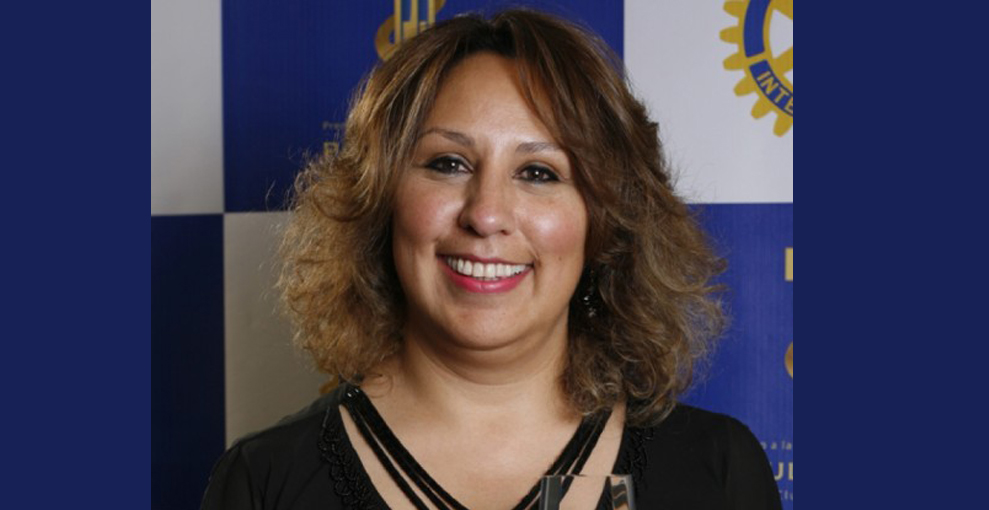
08 Jul Interview with Cynthia Yañez Eid, Minister of Sustainable Tourism, Cultures, Folklore and Gastronomy
The new government of President Paz has decided to elevate tourism to a higher institutional level with the future creation of the Ministry of Tourism and Gastronomy. What structural change is Bolivia aiming to achieve with this new institutional framework and how will it redefine the management of the sector?
I think it’s important to mention that there have been 20 years of neglect of a sector that is fundamental to the economy and especially to the local economy, which in Bolivia is decisive. One of the key issues is that the main tourist destinations are located in smaller towns, not in large cities, but in places that require local development. So, after the president took office and made the decision that tourism should be treated as a cross-cutting issue across other sectors and gave it the necessary importance — not only as tourism, but also by structuring the ministry around concepts such as culture, gastronomy and folklore — this gave tourism a much broader dimension and placed greater value on national culture.
From that moment on, what changed fundamentally was the approach, but also the ability to give local development the place it truly deserves in terms of tourism development. We have been so neglected that one of the main issues we must address from this ministry — working in coordination with many other ministries within the government — is basic services. We have destinations that need action at the most fundamental level. We must resolve issues that have not been addressed over the past 20 years. If we want destinations that are complete and ready to receive tourists, we need to tackle essential matters such as waste management, basic sanitation systems in many cases and access to potable water. These are the first steps toward achieving sustainable tourism.
Second, we must address connectivity, which is a major issue and absolutely fundamental. This includes not only Bolivia’s connectivity with the world and the world with Bolivia, but also internal connectivity. This relates to air transport — because Bolivia is largely dependent on air travel — but also to roads, transportation and tourist safety within tourism circuits. There is a significant level of safety, but we still need to address specific issues, such as safety in transportation. At the same time, you can feel completely safe here. Bolivia is a country where living culture is part of everyday life — we live our culture. What you see in the streets, for example in La Paz, is essentially living culture. It is a welcoming culture, very open to receiving foreigners. This also means that all the efforts we make will yield quick results, so these are the issues that I consider fundamental.
Another important aspect we must work on is the culture of peace and trust, as the president calls it. Tourism cannot exist where there are blockades, therefore we must work on awareness and above all on local development, so that what was a common practice for 20 years — road blockades, street blockades and so on — comes to an end.
On the other hand, there is the fundamental aspect of services. We are preparing in terms of tourism infrastructure. The private sector has made significant efforts; although it has been neglected, it has continued to invest and to survive. I believe this is where we must collaborate. We will soon introduce a new investment law and we will create a new aeronautics law to enable open skies. The idea is to create the right conditions for the private sector, which has been completely neglected, so that tourism can truly flourish very quickly.
Even without proper support, Bolivia has already reached tourism figures similar to those of 2019. So, just imagine the potential we have if we provide the necessary attention, the legal security required and, of course, the right conditions at the destination to receive the tourists we are capable of attracting.
One of the initiatives we are developing — and which I hope to deliver by August — is the country brand. We are working in coordination with the private sector, but also with communities and the rural sector, because it is important that this brand, which will become our hallmark going forward, and hopefully for the next 30 years, be a true country brand linked to tourism, one that is institutionalized and embraced by society.
The new government has recently eliminated visa requirements for citizens of several countries, including the US. How does this measure fit into a broader strategy to improve connectivity and international access to Bolivia and what opportunity does the US market represent for Bolivia?
One of the issues I refer to as ideological biases has, in practice, only created barriers for tourists who wanted to come to Bolivia. One example is Israeli tourists, who had a very important destination in the Rurrenabaque area and the Madidi region. From one day to the next, despite having infrastructure in place and a significant flow of tourism to the area, visas were suddenly cut off and that destination almost lost the infrastructure it had built over time.
So, removing visa requirements for these countries — ten in total, including the United States, Israel and South Korea — is essentially about opening up our country. It is a small but clear step toward that goal. It is also a quick measure, which is why we implemented it.
The second step is connectivity, because removing visas is not enough if we do not address connectivity. This is one of the issues we are working on with the Minister of Public Works to accelerate the process, as it is fundamental. Connectivity means opening up the skies, because that is the only way forward. It is not about protecting one airline or another, but about opening the skies. In other words, if we want tourists, we need to open our skies.
Strengthening domestic tourism has also been identified as a priority. How can the sector contribute to boosting regional economies and generating opportunities across Bolivia under sustainability and conservation goals?
One of the issues that I believe is important to address — which also serves as a kind of training ground for receiving international tourism — is domestic tourism. Domestic tourism is a sort of exercise in opening up destinations and providing the necessary services so that the local population becomes accustomed to tourism, welcomes it and delivers the appropriate level of service.
So, in the first months of President Paz Pereira’s administration, we have defined, through a consensus-based process, a national holiday calendar — something that was not customary in Bolivia. We have created the possibility of defining each year what the domestic holiday schedule will be, so that people can plan their trips and decide what to do during long weekends. We have added a few more holidays than previously existed, but also with the aim of allowing businesses to better organize and plan their activities. The idea is to continue doing it every year as domestic tourism is fundamental. It truly drives a significant portion of the economy.
During the most recent Carnival in 2026, we saw very strong activity in five key destinations: Oruro, Santa Cruz, Tarija — which is emerging as an important Carnival destination — La Paz and Cochabamba. Why? Because we made a deliberate effort to promote internal travel and encourage people to move around the country to experience these celebrations. For Holy Week, we are positioning Sucre as a central destination. We are preparing a campaign aimed at encouraging people to look at a domestic destination with fresh eyes and to go and experience a Holy Week that offers a wide range of activities that many people are not aware of. It is truly interesting to see what happens in Sucre throughout Holy Week. For example, there is the “Sabores Santos” festival, which is a very interesting gastronomic event.
Each city has a significant level of activity tied to specific dates — Holy Week in this case and Carnival in the previous example. What we are trying to do is promote destinations based on the particular motivation that draws visitors in each case.
With the incorporation of gastronomy into the ministry, how can Bolivian gastronomy contribute to strengthening cultural identity and enriching the country’s tourism experience?
One of the things that I believe has been happening in Bolivia in recent years is that gastronomy has taken off on its own, without much support. However, some prominent figures have begun to emerge — very interesting chefs who have received international recognition and awards. There are also products that are becoming widely known, such as coffee and high-altitude wine, for example. It was the president who made the decision that gastronomy was at its best moment and that what we needed was to give it a strong push from the national government.
We should not forget that gastronomy is ultimately linked to territory. The product you present on a plate reflects a relationship between territory, culture and flavors, because it is the result of countless combinations that originate from a specific place. We have gastronomy from the western regions, with a wide variety of very flavorful products, such as potatoes, of which we have an impressive range. In addition, in northern Potosí and Potosí, there is quinoa, which I personally love. But we also have Amazonian cuisine, which is now gaining significant recognition. It includes wild fruits and fish. We are now seeing a gastronomic richness in Bolivia that had not been visible for a very long time.
Gastronomy is a reason to visit a country, a reason to stay in a place — but it can also be a reason not to visit. That is why one of the areas we are working on through the Vice Ministry of Gastronomy is international certifications, so that restaurants in key tourist destinations can be certified. This ensures that visitors know they can not only enjoy a delicious local dish, but also a safe one that will not cause harm, meeting all the standards of international service. We began this effort in Oruro for the Oruro Carnival and now the vice minister is carrying out certifications in several parts of the country, as there is clear demand. We believe this is part of the role we can play as a ministry: to provide training and strengthen the local development of gastronomy.
What does the United States market mean to you in terms of its potential for visibility and reach?
I would say it is one of the most important markets we have. Clearly, there has been very little communication and promotion of our country in the North American market. However, the American tourist is a high-spending tourist. They come to Bolivia to stay for several days — not just two or three — but tend to have a longer stay, so for us, this is a very important segment. We need to start promoting Bolivia in the US and recognize that its characteristics are very attractive.
For example, the Salar de Uyuni receives a significant number of visitors from the US. There have even been cases where charter flights have arrived directly in Uyuni, visitors have spent two or three days enjoying the full circuit — including the Salar de Uyuni, Laguna Colorada and Laguna Verde — and then departed on the same charter. So, we already have a segment of high-income visitors and that is the type of tourist we are targeting as a country. The goal is to attract relatively high-value tourism, with an average stay of around five days, which allows us to fully leverage circuits and destinations that are already prepared to be offered.
What message would you like to convey to our audience in the United States, which includes potential investors, tourists and government stakeholders?
The important thing is to tell them that Bolivia is preparing to receive the kind of tourist we are seeking: a high-income traveler. We are waiting for you in Bolivia, because one of our main priorities is to welcome visitors to the country. Bolivia is a warm and welcoming nation, where people receive you with open arms and where every street offers living culture to experience and enjoy. At the same time, we are putting in place the necessary regulatory framework to provide sufficient guarantees for investors, so they can come to Bolivia and invest in the tourism sector, which is highly promising. This goes beyond hospitality and gastronomy; it also includes a wide range of areas such as transportation — both land and rail — as well as the airline sector. Bolivia is truly opening up to the world, not only to receive visitors but also to welcome investors. We invite you.
Sorry, the comment form is closed at this time.