
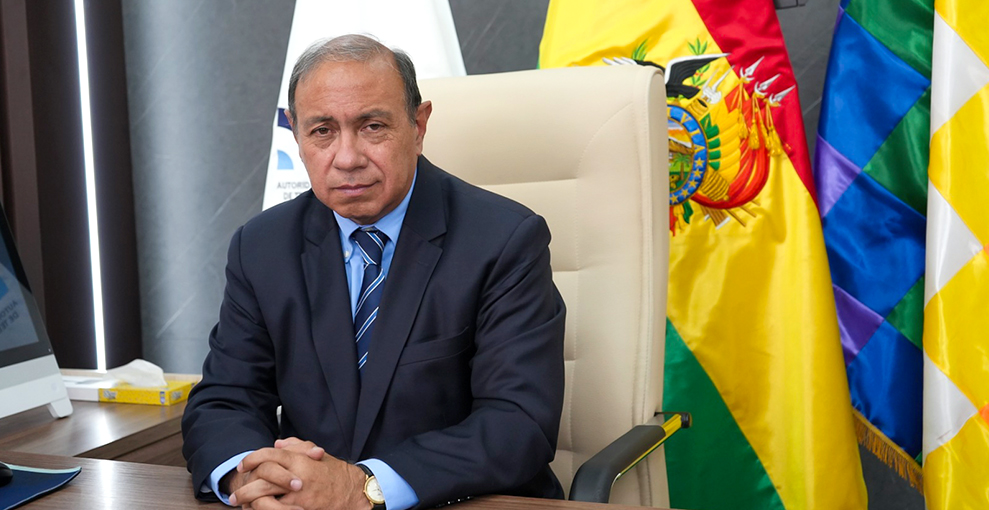
06 Jul Interview with Carlos Alberto Agreda Lema, Executive Director, Authority for the Regulation and Oversight of Telecommunications and Transport (ATT), Bolivia
After taking office at the end of 2025, you emphasized the need to eliminate the “Estado tranca” (“bureaucratic bottleneck state”) and facilitate investment. What concrete administrative reforms has the ATT implemented so that licensing and regulatory processes are now more agile for international companies?
It is important to explain that this is a process rather than a one-time event. The dismantling of the “Estado tranca” involves a series of actions ranging from regulatory reforms to operational measures. On the regulatory side, there is an initiative launched by the central government. A decree has been enacted establishing a set of procedures that all public entities must apply in order to reduce bureaucracy, which has been identified as one of the main obstacles hindering both regulatory functions and the normal operation of different sectors.
In the specific case of the ATT, this is fundamentally important because it regulates three strategic sectors: transport, telecommunications and the postal sector. This is highly significant because it creates the conditions for the development of competitive markets in sectors that are currently at the forefront of technological innovation, connectivity and the reduction of the digital divide. From that perspective, we are particularly interested in creating the right conditions to attract investment, encourage companies to establish operations and foster competition, with two central objectives. On the one hand, we focus on the user: their experience and the possibility of receiving the best possible service for what they are paying. On the other hand, this sector is a pillar of economic development, since it connects and supports the country’s productive sectors.
The foundation of the country’s economic development is undergoing a major transformation based on a new vision the government has regarding the management of the national economy. That vision is fundamentally centered on connectivity, technological innovation and investment and that is the triad we are currently working on.
What are we doing in concrete terms? We are promoting two lines of action. The first is a regulatory and legal modernization process aimed at simplifying procedures and ensuring that all operators interested in coming to Bolivia enjoy legal certainty, equal conditions for entering the market and absolutely clear rules of the game, enabling them to know exactly, in the long term, why they are coming, how they will enter the market and how they will operate in the country. That is essentially what the ATT is currently working on at the regulatory level. Six months [since the presidential elections] is still not a long period of time and the process of building this new regulatory framework is progressing, we believe, at a very good pace. We expect its results to become clearly visible very soon.
At the practical level, we are implementing digital platforms and have already launched several digitized processes. Today, it is no longer necessary to go through the previous bureaucratic procedures or require the physical presence of individuals seeking information or submitting documentation. As a result, processes become more agile, more traceable and more transparent, while also reducing the potential for corruption or any similar situations that may arise when systems do not guarantee transparency.
Digital IDs already exist and the ATT is working in coordination with the Agencia de Gobierno Electrónico y Tecnologías de Información y Comunicación (Agency for Electronic Government and Information and Communication Technologies) to promote two fundamental tools: digital citizenship and digital signatures. Digital citizenship is already active and operational. Digital signatures, while already existing at the government level, have not yet been fully expanded to the general public as we must ensure that networks are completely secure and invulnerable in order to protect data confidentiality. We have the obligation to guarantee the proper and confidential use of information and, at the same time, ensure both the state and potential operators that the individual carrying out procedures is in fact who they claim to be. That is the balance we are currently working toward.
Following the recent update of the equipment homologation list in March 2026, how does the ATT plan to effectively integrate satellite internet solutions (LEO) in order to close the digital divide in the most remote rural and productive areas?
The implementation of these services will be further facilitated by the tools we are currently developing. The possibility for a person to complete procedures directly from home, through their computer or mobile phone — devices to which more than 90% of the population already has access — represents a fundamental change. This will be made possible through digital citizenship, digital signatures and the growing obligation of public entities to create digitized platforms for service delivery.
Regarding the digital divide, this is a crucial issue for Bolivia and one of enormous economic and social importance. We do not want to leave anyone behind or exclude any sector of the population.Bolivia is a complex country: it has multiple ecosystems, a vast territorial extension, a relatively small population and a significant percentage of people living in situations of economic vulnerability. Therefore, serving all these sectors is a priority. To address this, the country has made a very significant effort to expand its fiber optic networks. We currently have more than 16,000 miles of network infrastructure and have managed to reach every municipality in the country. That is our foundation and starting point.
However, despite this effort, there are still large areas without connectivity and many of them will hardly ever be integrated into the fiber optic network due to the high costs involved in reaching very small or dispersed populations. It is in this context that, as part of the president’s commitment and because this has now become a state policy, we are opening the possibility of creating a connectivity services market — mainly internet services — through low Earth orbit satellite constellations.
We began this process with Starlink, a company that recently received an experimental license from the ATT and began operations in Bolivia approximately two and a half months ago. The initial results have been very promising and we believe this technology will allow us to close the digital divide by reaching places where fiber optics will never be able to reach.
The idea, however, is not only for these solutions to benefit individuals at a personal level, but also to integrate with the economic activities carried out in those regions, generating new economic alternatives, improving quality of life and fully incorporating these communities into the national economic system.
For that reason, within the next four to six weeks we will have the general regulations ready for the implementation of low Earth orbit satellite services. This will open the market to all operators interested in entering Bolivia. Starlink has already confirmed to us that it intends to establish a permanent presence once it obtains a definitive license. Amazon has also shown interest, as well as European networks linked to operators such as Hispasat and other constellations currently under development. We are confident that this will not only expand the connectivity options available to the population, but will also make it possible to provide a service capable of covering the entire national territory.
How will this infrastructure translate into improved logistical competitiveness for foreign trade, particularly in relation to the connection of the bioceanic corridors ?
The process is still at a very early stage, which means there are significant opportunities ahead. Bolivia has enormous potential due to its strategic location in the heart of South America. We share borders with five very important countries: Brazil, Argentina, Chile, Paraguay and Peru. This allows us to position ourselves as a key articulation hub between the Pacific and Atlantic Oceans, precisely through the bioceanic corridors.
Because of its role as the regulator of telecommunications and transport, the ATT is involved in both physical and digital connectivity. Our task is to integrate all of this connectivity development with the physical and digital processes currently being promoted throughout the country. The objective is to guarantee two fundamental things. On the one hand, we seek to increase productivity through the use of new technologies, an area in which Bolivia still faces significant delays. For many years, there was a strong emphasis on state intervention and a more inward-looking economic vision, which left aside many of the opportunities created by globalization and the exponential growth of international trade.
Today, we need to move forward rapidly in order to compensate for that delay and that also opens up many opportunities. National policies clearly establish that all these efforts in physical and digital connectivity must serve not only a social purpose — integrating all Bolivians — but also transform Bolivia into a regional integration hub for the countries of the continent and fully connect them to the economy. For this reason, we are working intensively on strengthening logistical networks through various state entities and international programs that Bolivia is joining. The bioceanic corridors are a central part of that initiative, but they are not the only project.
In addition to the bioceanic corridors, we are broadly developing the national highway network, continuing and expanding projects that are already underway. We are also seeking to guarantee the interconnection of the country’s two existing railway networks, which are currently disconnected: the eastern network and the western network. The western railway network is oriented toward the Pacific and mainly supports the mining sector, while the eastern network is oriented toward the Atlantic and primarily serves agro-export products such as soybeans. The current objective is to interconnect both networks in order to consolidate a much more efficient national logistics infrastructure.
Likewise, we are working on air connectivity through two fundamental initiatives. The first is the open skies policy. As a landlocked country, Bolivia needs to ensure that physical connectivity functions properly. The open skies policy will allow international airlines to operate to and from Bolivia and we are even evaluating the possibility of advancing toward cabotage services that would allow foreign companies to operate domestic routes within the country, always under the applicable national regulations.
The second major initiative is the creation of an air hub in the department of Santa Cruz. We expect this project to become a major driver of economic development. Since Bolivia has a relatively small market, we are in discussions with major global companies to encourage them to incorporate the Santa Cruz hub as one of their strategic centers, thereby generating all the economic activity that international hubs typically create.
In the digital sphere, we are working on expanding fiber optics and opening the market to the use of low Earth orbit satellites in order to guarantee connectivity throughout the entire national territory. At the same time, we are adapting and modernizing regulations to attract data centers, gateways and all the necessary technological infrastructure.
Our intention is to offer conditions of technological neutrality, legal certainty, investment incentives and a favorable environment for the development of new technologies. Many international companies are currently looking for the best conditions under which to establish operations and we are confident that Bolivia can become a clear and competitive alternative once all of these initiatives are fully underway.
Could we say that the ATT functions as a kind of one-stop shop for all these matters, including for individuals or companies interested in investing in Bolivia?
Yes, absolutely. We are trying to assume that role. This is a new task for the regulator. Traditionally, regulators have focused mainly on supervising and overseeing regulated sectors. We want to move beyond that phase — although we will continue to maintain it because it is an essential part of regulatory work — and also fulfill a promotional role for everything Bolivia has to offer.
We hope to make databases available for each of the regulated sectors so that any investor can access the information they may need. This still needs to be coordinated with the ministries. We will see whether this function ultimately remains within the ATT or is assigned to the Ministry of Foreign Affairs; that is something that still needs to be defined. In any case, we will also be able to provide all the necessary information to any investor, helping them identify the appropriate channels and institutions they need to approach.
What plans does the ATT have for e-commerce, which is so important nowadays? Do you want to attract companies such as UPS, DHL and others like them?
Yes, but we are also in discussions with passenger airlines that, primarily coming from Asia, are looking for an anchor point in Latin America from which they can redistribute passengers. There is an ongoing debate within the aviation sector regarding whether the point-to-point model or the hub-and-spoke redistribution model is more efficient. At one point, this was precisely the reason why aircraft such as the Airbus A380 were developed. The idea was to operate very large aircraft on long-haul routes, arrive at a central hub and from there redistribute passengers to surrounding regions using smaller aircraft.
Later, that vision changed and many airlines decided to prioritize the point-to-point model, leaving aside the hub model in Latin America. However, what has happened is that hubs have proven to be highly successful: the hubs in Panama, Bogotá and now Lima. This has created a very important market that airlines are beginning to reconsider, which is why today there is a combination of both types of service. We are confident that Bolivia can still find a niche where it can offer something attractive, mainly because of its geographic location. We are less than three hours away from practically every capital city in South America and we believe that can help make this project successful.
Regarding the postal sector, we are working on two fundamental areas. Correos de Bolivia is currently in a position of significant weakness and, as part of a state policy decision, we recently participated in the UPAEP Congress — the Postal Union of the Americas, Spain and Portugal. There, we achieved three fundamental things. The first was advancing a restructuring program for the Bolivian postal service with the support of UPAEP and multilateral organizations, which we believe will allow us to begin a comprehensive transformation process for Correos de Bolivia in the short term.
Correos de Bolivia, like practically every postal service in the world, is undergoing a very significant transformation process. If you ask anyone today how many letters they received over the past year, they would probably answer none. That is happening everywhere. The traditional postal business has practically disappeared, but a new one has emerged: e-commerce and parcel delivery linked to online trade.
Bolivia also wants to be part of that process. While we recognize and promote the participation of the private sector in parcel delivery and transportation services, we are also interested in ensuring compliance with the international commitments Bolivia has with the Universal Postal Union. That is why we want to guarantee the existence of what is known as the basic postal service, ensuring that any citizen, anywhere in the country, has access to these types of services. To achieve this, we have proposed that Correos de Bolivia establish a presence in all 346 municipalities of the country, thereby covering the entire national territory. Additionally, we have reached an agreement with Correos de España to begin a process of capturing parcel traffic originating from Asia, specifically through e-commerce. Spain has very aggressively developed a hub in Miami along with a highly interesting logistics infrastructure and we have partnered with them to analyze how we can jointly build this network.
The idea is for all of this to also become part of the support networks for economic development, especially aimed at medium-sized and small businesses. This is particularly important for Bolivia, where there is a very large informal economy. That economy also needs support in order to formalize, generate growth opportunities and gain access to development opportunities. We believe this project can become part of that support system to help those businesses formalize and grow.
Foreign direct investment is key to the development of strategic infrastructure, such as transportation and telecommunications. How does the ATT ensure transparency and free competition in these sectors within a highly competitive global market?
The ATT is working with the different ministries, particularly the Ministry of Public Works, to rebuild a legal framework that is modern, sustainable, competitive and transparent. If we succeed in doing that, we will have created the foundation for attracting investment under appropriate conditions. If we add to this the investments being made by the Bolivian State and by private operators to create a strong logistics and support network, then we are confident that the conditions for doing business will exist. Bolivia has traditionally been a country open to the world. President Paz has reflected this through a slogan that says: “Bolivia to the world and the world to Bolivia.” What had not taken place in recent years is now becoming almost a mantra, a necessity for the country moving forward.
For this, what do we need? We need to provide legal certainty, predictability and objective conditions so that investment projects can, first, attract investment and, second, allow those investments to develop in the best possible way. In today’s world, isolating oneself simply does not work. We need to open ourselves to the world, learn from international experiences and welcome those experiences. That comes at a cost, which involves creating the possibility of a win-win dynamic, where the investor benefits, the country benefits and the citizen benefits as well. If this works, then Bolivia — which traditionally has been an exporter — will continue strengthening its role. We have exported minerals, we have rare earths and critical minerals that are essential for global economic development and we trust that this will continue.
We have also been exporters of gas and a very important center for energy exports. Today, we are relaunching our energy sector. We are confident that Bolivia will once again become a hub for energy development, not only in gas but also in electricity generation. Several projects are currently being developed that will allow us to achieve this. These are sectors where we need and expect to have foreign investment. Foreign investment has always been welcome and it continues to be welcome today. We hope to provide even better conditions than before so that companies can establish themselves in Bolivia and carry out their activities under normal conditions, just as they would in any other country in the world.
Considering the new standards for devices such as IoT and Industry 4.0 technologies that were approved and tested this year, how do you envision Bolivian regulation fostering the creation of these cities and industrial automation in the short term?
The short term is part of a process in which Bolivia has been significantly behind on these issues. Therefore, what we are currently doing is creating the regulatory framework needed to attract investment into these sectors and subsectors. From that perspective, in the short term, what we hope to do is strengthen what we already have, which is mainly linked to specific economic sectors, such as mining and hydrocarbons, which are traditional industries but are also incorporating cutting-edge technology into their operations. These sectors can make very good use of these tools and we believe it is important to provide them with the best possible conditions for this to succeed.
In the case of smart cities and the benefits that ordinary citizens may receive from all of this, we believe the process will take longer. It requires more time, greater investment and in some cases even the creation of technologies adapted to the country’s particular characteristics. There are several subsectors operating within the informal economy that are very important, but due to their scale, they are not yet in a position to directly adopt or work with these new technologies. There will need to be a gradual process of incorporating these tools and this is something that must be built step by step. Smart cities are absolutely desirable, but they are also something that will require time, effort and a tremendous amount of work.
As the executive director of a technical and strategic institution, what is your vision for positioning Bolivia as a central logistics and digital hub in South America by the end of 2026?
We believe Bolivia has enormous potential. There are sectors and subsectors that are already part of this race and therefore what we are doing is focusing on two main areas. On the one hand we believe that by the end of the year we will have the basic regulatory framework approved. We will also see the development of 5G networks, for example. This process has already begun and we are confident that over the coming months there will be significant expansion, improving the quality of services such as mobile telephony, IoT applications and all these new technological ecosystems that are emerging. We believe we will make substantial progress in defining policies and regulations and we will begin specific development programs in physical connectivity, including roads and railway transportation.
The Bolivian government has also made the decision to move quickly toward digital government. We are confident that this can become a model for how these systems can be implemented. In Europe, particularly in the Nordic countries, digital government systems have been developed to a very advanced level and they serve as an example. While we recognize that we are not yet in a position to achieve something at that same level, we do believe that we can move forward very rapidly and consistently in the area of digital government. Digital government will help pull the rest of the sectors into this dynamic as well, so I believe that by the end of the year we will have many important developments that will allow us to move from ideas to practical implementation.
What would your final message be to the readers of this magazine?
My final message is that Bolivia is a friendly country, Bolivia is an open country and Bolivia is a safe country. We are working to ensure that these three characteristics become fully consolidated and recognized everywhere.
This is not an easy process. It is easier to talk about things than to actually implement them, but there is a genuine political will to move forward and guarantee these conditions. It is absolutely clear that investment is a fundamental component of this entire process and Bolivia understands that. Therefore, we are confident that investors who carefully examine what we have to offer will find major opportunities, just as many who are already here have found.
In other words, this process is not beginning today; rather, it is being expanded and strengthened. I am certain that investors will find Bolivia to be an interesting, attractive and profitable place in which to establish themselves and develop their activities.
Sorry, the comment form is closed at this time.