
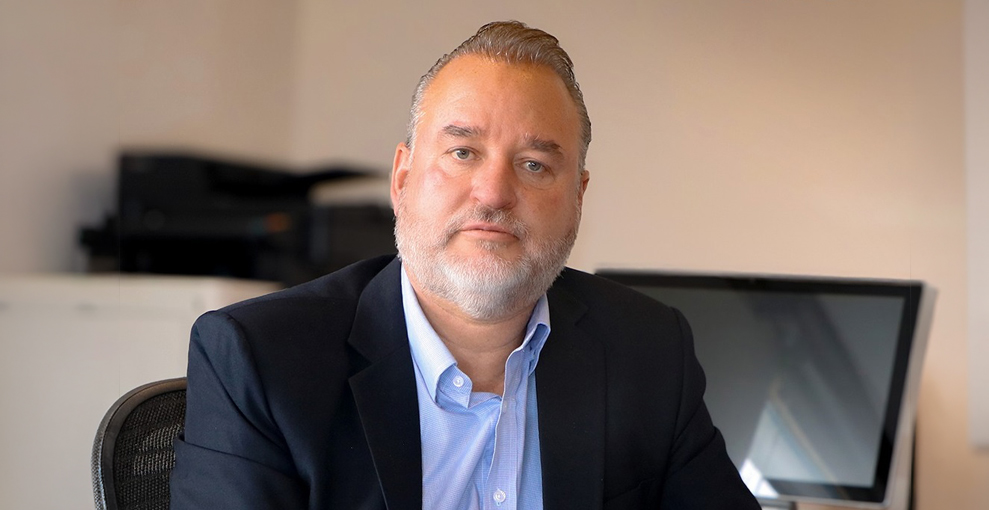
15 May Interview with Jorge Francisco del Solar, General Manager of ENTEL Bolivia
You have launched some new products, specifically through divisions ENTEL Empresas and ENTEL Gobierno. Could you tell us about these new launches and what your goal has been since November, when you took up your current position?
When I joined in late 2025, I found an ENTEL that is a very large company, a traditional leader in the telecommunications sector. It has a very extensive and robust infrastructure, both in terms of connectivity and equipment, which can be put at the service of Bolivians. However, this was also an area that had received less attention. ENTEL had a very political focus and was not sufficiently focused on profitability. That is what we have begun to change. We wish to showcase the more corporate side of ENTEL, divided into three business units: ENTEL Empresas, ENTEL Prime and ENTEL Gobierno. ENTEL Empresas is focused on bringing our capabilities and the solutions we can offer to large companies across sectors such as banking, mining, livestock and agriculture. This is one of our main focuses. We have data centers, cloud services and a range of infrastructure solutions that we can provide to companies for their use.
At the same time, we had overlooked another important segment: small and medium-sized enterprises (SMEs). In reality, this is the largest business segment in Bolivia. There are thousands and thousands of entrepreneurs who have started their own firms and who also require technology and support. Artificial intelligence (AI) is a tool that will be extremely valuable for them, perhaps even more so than for other sectors. Through strategic alliances with industry leaders around the world, we will be able to provide a variety of services that we are seeking to make available to all types of businesses, including many SMEs. Finally, at the government level, we work with three levels of government: the central government, departmental governments and municipalities throughout the country. We are seeking to offer these types of services at every level, depending on the size and needs of the government entity or division we are serving.
We have solutions for information storage, digitalization, AI and many other services that we can provide. We are also specializing an entire department dedicated to developing and delivering solutions for government institutions. Although ENTEL is technically a private corporation, approximately 97% of its capital is state owned. As the government is our largest shareholder, we naturally have a strong orientation toward serving the public sector. We saw it as an urgent necessity to be able to support all divisions of the state through our service offering. That is essentially our focus.
You are strongly focused on technological modernization and the expansion of digital connectivity in Bolivia, but how do you intend to achieve these goals? Do you need international partners, particularly from the US, and are you open to cooperation in this regard?
Of course. We maintain an ongoing relationship with the embassy and the State Department and have held several meetings with them and are exploring opportunities to bring new initiatives to Bolivia. Cybersecurity is a key priority for us as Bolivia remains highly vulnerable in such matters, so there is a significant need for stronger protection. We have a strategic alliance with Fortinet, which serves as one of our key partners in delivering cybersecurity solutions. Through this partnership, and with their support and expertise, we provide cybersecurity services to businesses throughout Bolivia and, ultimately, to all Bolivians. We offer a wide range of solutions. We are also working with Armada, another American company that can provide us with storage capabilities and other technological solutions.
In addition, we have an important partnership with Starlink and the broader SpaceX ecosystem, which has been very helpful to us. We also work closely with Cisco, along with many other American companies. These are organizations with which we already have established relationships, but we are eager to deepen and expand those partnerships even further.
Bolivia has a very complex geography; with many mountains and difficult terrain it is challenging to meet the connectivity needs of the entire population. How are you working to eliminate that digital divide and address these challenges?
Our primary vocation is service. Beyond that, we are committed to bringing technology closer to people. This is both our mission and our social responsibility. Reducing the digital divide is almost an obsession for us. Over the past several years, ENTEL has deployed a very large telecommunications infrastructure from a network-size perspective. However, that infrastructure has not always been supported by the conditions and technologies necessary to truly improve connectivity for Bolivians. Therefore, beyond simply expanding the network, what we are focused on is improving its quality and the services we offer so they are more accessible to Bolivians and genuinely useful in their daily lives. We currently have a presence in 335 municipalities across the country, covering virtually all intermediate cities as well as Bolivia’s departmental capitals. However, in some locations the technology remains outdated — 2G or 3G — which ultimately does not provide meaningful benefits in people’s everyday lives.
Our objective is to leverage this extensive network and technological infrastructure not only to continue expanding coverage to more regions, but also to improve the quality of our services and the solutions we provide, so that they make a real difference in the lives of Bolivians and have a tangible impact on reducing the digital divide. We also have a satellite called Túpac Katari, which has been in operation for several years. It is currently approaching the final stage of its useful life and is expected to reach the end of its operational lifespan by the end of next year. However, as I mentioned earlier, we have already developed strategic partnerships, including with Starlink. In addition to serving as their reseller in Bolivia, we are now undertaking a major project together through the Ministry of Education.We are deploying 5,000 antennas in public schools located in rural and remote areas across the country. Through this technology, we will be able to provide connectivity to locations that previously had no access to telecommunications services.
Solutions such as those provided by Starlink will allow us to move away from reliance on traditional geostationary satellites, which are complex and less flexible, and instead take advantage of low-Earth-orbit satellite technology. This approach enables us to bring connectivity to a far greater number of remote locations and reach communities that were previously difficult to serve.
How do you see the future of AI in Bolivia?
AI is extraordinary as it is changing the entire world; Bolivia cannot remain on the sidelines of that reality. AI’s greatest advantage is its ability to provide solutions for all types of businesses and individuals. We are very pleased to be able, through our strategic partners, to offer this type of technology and innovation to the public so that it can have a real impact on their daily lives. That is ultimately what we are trying to achieve. We believe that, particularly for SMEs and small businesses, the implementation of even basic AI concepts can significantly improve services, increase efficiency and make day-to-day operations much easier. For that reason, we are excited about the opportunity to provide access to this technology and make it available to all of our customers throughout Bolivia.
As a final message, what would you like to say to our readers across the Americas and around the world?
We have a significant responsibility. As we discussed, we have a social responsibility to help reduce the digital divide, but also a responsibility to modernize a state-owned telecommunications company like ENTEL and presenting a new face to the public. ENTEL is currently the only company in Bolivia offering 5G technology, which is an important milestone. We want people to be able to access and experience this technology, and I am confident that once they do, they will not want to go back. At the same time, we are moving toward a more business-oriented approach, providing solutions for companies through strategic alliances with some of the world’s leading technology firms. That is a key part of what we are trying to achieve. However, we are doing this without losing sight of our social responsibility. Maintaining a strong social focus is something that has been entrusted to us by the President and the Minister responsible for the sector. They have asked us never to forget our vocation of service, our commitment to connectivity and our mission to reduce the digital divide.
For that reason, we are working on all of these fronts simultaneously. We are striving to modernize the company, expand technological opportunities, strengthen services for businesses and fulfill our social mission of bringing connectivity and digital inclusion to all Bolivians.
Sorry, the comment form is closed at this time.