
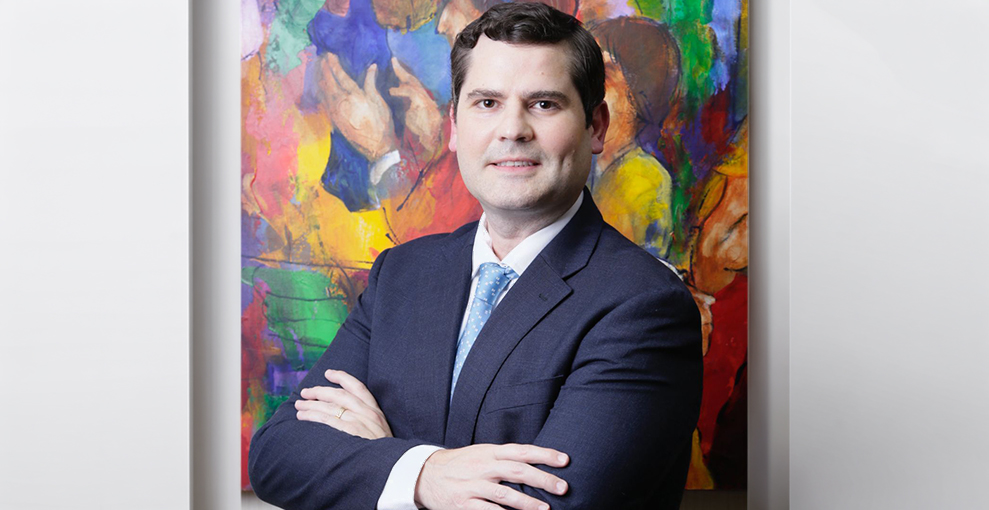
17 Jun Interview with Mr. Jean Pierre Antelo, President of Cainco
Bolivia is going through a decisive moment in redefining its economic model. What reforms do you consider essential to turn the country into an attractive destination for international investment?
CAINCO is a chamber of commerce with a 111-year history that has accompanied the country’s development. In its early years, that development took place far from government influence and over the last 50 years Bolivia found a strong productive vocation through the agro-industrial, energy and hydrocarbon export sectors.
The chamber initially established itself as an international trade institution, as these organizations are traditionally known. However, it gradually grew alongside companies that did not previously exist. A private university was even created to strengthen the private sector’s vision and enhance the entrepreneurial DNA that exists in the country. In addition, other representative bodies were developed, allowing CAINCO today to serve as the leading reference point and voice of the private sector. In times of difficulty, the institution seeks to contribute diagnoses and proposals regarding what Bolivia needs in order to move forward, after 20 years of a highly idealized economic model in which the private sector was not viewed as a strategic ally.
Today, there is a clearer understanding that the country needs to reintegrate into the global economy. Bolivia exhausted its main historical resource, which was gas exports, and currently agribusiness and all production from eastern Bolivia — including energy and food exports — have become strategic allies for the country’s economic survival.
Despite the current challenges, Bolivia needs to rebuild an economy capable of rediscovering a productive vocation, moving away from an exclusive dependence on gas. To achieve this, public-private partnerships are essential, as well as foreign investment in mining, lithium and rare minerals. It is also crucial to continue expanding food production, a sector with high global demand. Currently, Santa Cruz produces 70% of the food consumed in Bolivia and maintains significant export capacity, especially in agribusiness, meat production and the forestry sector. The latter sector holds enormous potential, not only in traditional timber exports, but also in the development of green bonds and environmental credits, leveraging environmental conservation efforts and the opportunities currently offered by the international green credit market.
Tourism is another sector with tremendous potential. While Peru currently generates around $500 million through tourism exports, Bolivia has enormous development opportunities, not only in Santa Cruz but across all nine departments of the country. To achieve this growth, tourism must be accompanied by infrastructure investment, including the construction of a new airport hub that would not only improve existing infrastructure but also attract new international airlines. This would once again open the doors to foreign airlines interested in operating in Bolivia.
In the past, American Airlines operated both cargo and commercial flights and the United States became one of the main destinations for Bolivian cargo exports. All of these sectors now represent significant investment opportunities. Bolivia seeks to achieve a balanced trade system capable of strengthening both exports and imports. The country has great export potential thanks to its talent, natural resources and products, but it also needs to import technology and raw materials. For this reason, strengthening these types of relationships and accelerating economic integration processes is essential.
Although there is currently no free trade agreement between the two countries, is there any agreement currently being discussed? How is the Chamber working to promote these types of agreements with the United States in the near future?
One of the main visions and strategic priorities of CAINCO and its economic team is to encourage market openness. Just yesterday, we hosted an event with more than 35 international delegations, where discussions focused not only on entrepreneurship, but also on the major economic conversations currently shaping the world. Bolivia needs to remain part of that global discussion. During the event, there was extensive discussion about the trade agreements Bolivia could pursue. One of the most significant was the agreement that was previously lost with the United States, the ATPDEA, which today could potentially be reconsidered under a new version.
Currently, after gas exports, the US is one of Bolivia’s main export markets, which means there is enormous commercial potential. This is also linked to the need to import new technologies and open new markets — something that requires trade agreements that do not yet exist today. In addition, Bolivia is joining Mercosur as a full member, which will allow the country to negotiate as part of a bloc with the United States and gain access to new market opportunities.
Today, Latin America — and Bolivia in particular — has a distinctive advantage compared to other regions of the world: it is a region facing economic challenges, but without armed conflicts. This provides a certain level of certainty and stability for international logistics chains. For example, a flight between Santa Cruz and Miami takes approximately seven hours. That connection allows for the transportation of cargo, passengers, tourism and human talent, facilitating commercial and academic exchange, including access to the network of US universities.
There is also tremendous tourism potential. Bolivia offers unique destinations such as the Uyuni Salt Flats, Lake Titicaca and the Jesuit Missions of Santa Cruz, all of which could benefit enormously from greater international integration. In this context, trade agreements become essential. The world is currently debating between multilateral models and bilateral agreements and Bolivia needs to advance on both fronts. The country has fallen behind for many years and now must act simultaneously in different directions to accelerate its international economic integration.
In relation to the United States, could you explain what is being planned to increase the number of flights and eventually bring back American Airlines?
Historically, one of the main sources of tourism to Bolivia was the United States, along with Israel. A large part of that traffic arrived through American Airlines’ direct flights. Currently, several airlines are interested in operating in Bolivia if the country moves forward with an open skies policy that allows direct connections with the US. Tourism represents an extremely important sector for the country, but so does the participation of US companies linked to industries such as energy, technology and business development, all of which require greater connectivity and openness. The goal is to strengthen the connection with the US and also turn that country into a hub for onward connections to other cities and international markets.
Today, Bolivia already has direct flights to Miami operated by the state-owned airline BoA. However, in the past, American Airlines operated routes to La Paz and Santa Cruz, with flights that arrived completely full. That clearly demonstrated the enormous tourism and business potential that exists.
Currently, the objective is for Santa Cruz not to remain solely a traditional tourist destination, but to evolve toward a business tourism model by incorporating the MICE concept (Meetings, Incentives, Conferences and Exhibitions). The idea is to attract visitors traveling for business, investment and corporate activities, thereby increasing the average spending of tourists visiting Bolivia. This would generate greater foreign currency revenue for the country and help consolidate Santa Cruz as a regional hub for business and connectivity. For that reason, there is tremendous potential in opening markets through open skies policies, since these facilitate greater international connectivity and simplify air travel connections, boosting both tourism and economic activity.
You are a member of the World Chambers Federation and you participated in the summit held in Santa Cruz. What conclusions you have drawn, what your expectations were and how you believe this conference turned out?
Over the past few years, CAINCO has been transforming the strategic pillars that guide its work as a chamber and alongside its affiliated companies. One of those pillars is internationalization; the second is digitalization; and the third is reducing gaps in different areas, including gender issues, energy and alignment with the new demands companies face today. The Chamber must always reflect what companies are currently doing and what they expect from their business institution.
CAINCO’s incorporation into the World Chambers Federation (WCF) emerged from its participation in a commission of the International Chamber of Commerce. Later, Bolivia achieved an important milestone when the first Bolivian representative joined the WCF Board Members.
Bolivia competed with major international cities and capitals to become the host of this event held over the last two days. We competed against cities that offered greater facilities and fewer perceptions of risk, yet we ultimately succeeded in bringing together participants from more than 35 countries and chambers of commerce from different parts of the world. Many attendees previously knew Bolivia only through international headlines. However, this summit allowed us to send more than 100 new ambassadors from the private sector out into the world, demonstrating that Bolivia has enormous potential in areas such as sustainability, energy, gastronomy, tourism and human capital. The conference also highlighted the safety and opportunities that exist in the country for investment and tourism development.
The event fulfilled a very important objective: not only showcasing the reach of the global network of chambers of commerce, headquartered in Paris, but also bringing together at this regional summit chambers and business leaders who now see Bolivia as a genuine business opportunity. In addition, the summit created a platform for projects led by young entrepreneurs — both men and women — to present themselves to the world and potentially gain access to investment and venture capital funding.
The debate around legal certainty remains central for the business community. What concrete signals does the private sector need to see in order to increase long-term investment?
We have been working on several draft proposals based on international experiences and models implemented in neighboring countries. It is clear that Bolivia needs to approve three major laws before the end of the year in order to advance the country’s macroeconomic adjustment process.
The first is a public-private partnership law, which would enable the development of strategic projects such as the modernization and expansion of Viru Viru Airport, while also facilitating open skies policies and greater international connectivity.
The second major reform is a new hydrocarbons and energy law. Bolivia possesses enormous mineral and energy resources and in order to develop that potential it must attract foreign investment aimed at the exploration and development of those resources. Historically, this sector represented one of the country’s main sources of economic income.
The third is an investment law that guarantees legal certainty for foreign companies that choose to establish operations in Bolivia. This legislation must ensure clear conditions for businesses to operate, grow, generate development and repatriate profits to their countries of origin, while simultaneously contributing to development and economic progress within Bolivia.
In addition, it is essential to provide certainty that, in the event of any dispute or conflict, international arbitration mechanisms can be activated, as is the case in other countries, allowing disputes to be resolved in a transparent and reliable manner.
The energy transition is reshaping emerging economies. How can Bolivia capitalize on its natural resources without repeating the extractive models of the past?
Bolivia currently faces two major challenges in terms of energy transition. The first is that the country historically depended heavily on gas exports, which for many years represented its main source of income. Today, that model no longer has the same capacity and Bolivia needs to once again promote exploration processes alongside international organizations and companies in order to identify new energy export opportunities. The goal is to recover Bolivia’s capacity to export energy to the world, primarily to markets such as Argentina and Brazil — major regional consumers — and eventually also to the United States, which could once again become an important player within this sector.
In addition, Bolivia possesses significant lithium reserves, a resource that today is essential for the production of batteries, solar panels and technologies related to electric mobility. However, the country needs to move much faster in developing this potential.
At the same time, Bolivia faces another critical challenge: by 2027, the country could experience an energy crisis, since gas remains its primary source of energy. If new exploration projects are not carried out and production and export capacity are not secured, Bolivia will need to identify alternative mechanisms capable of guaranteeing energy supply for industry, families and households.
This is where renewable energy becomes essential. These new energy sources will require foreign technology and investment in order to be implemented efficiently. In this area, there is enormous potential, particularly considering that neighboring countries such as Paraguay have made significant progress in transitioning toward more sustainable energy models.
Bolivia has exceptional natural conditions for the development of renewable energy. The country possesses solar, wind and hydro resources that could allow it to replace up to 70% of traditional energy sources with clean and renewable energy. Bolivia has territory, sunlight, wind and water — all the elements needed to create a tremendous opportunity for renewable energy development and to attract international investment. All of this opens up major potential for companies currently investing in a multi-energy model: maintaining part of the fossil fuel matrix while moving much more aggressively toward renewable sources.
The global context demands greater competitiveness and trade openness. How prepared is Bolivia to integrate more actively into global value chains?
The only way to remain competitive in a globalized world is by increasing productivity. For many years, certain areas were left behind, but Bolivia’s private sector has strongly committed to transforming its industries by renewing equipment, modernizing processes and becoming far more efficient in order to access new international markets.
However, there is one fundamental area that the country still needs to develop: infrastructure. To achieve this, Bolivia requires the participation of multilateral organizations that can provide financing and credit for the construction of highways, logistics corridors and strategic connections linking the country to both the Pacific and Atlantic oceans, thereby facilitating access to new markets. It is also important to strengthen the intraregional market, which could become a major opportunity for Bolivia. But to accomplish this, much larger investments in infrastructure are essential.
Bolivia also faces the challenge of lacking sovereign access to the sea. Although the country does have access to the Atlantic through river routes, it still needs to significantly improve its logistics and transportation systems. This includes modernizing the railway network, expanding and optimizing highways and strengthening the country’s overall transportation infrastructure. There is enormous potential in this area, especially considering that other countries have advanced significantly through strategic infrastructure investments that allowed them to become more competitive. That is precisely what Bolivia needs: infrastructure capable of enabling the country to reach international markets faster and more efficiently.
Bolivia is located at the heart of South America and precisely because of this strategic position, it has the potential to become a key player within the region’s integration corridors. To achieve this, the country needs to become an active part of the logistics corridors currently being developed to connect Brazil with Argentina and other regional markets. The vision is for Bolivia to consolidate itself as a regional logistics hub, not only in terms of air connectivity, but also through highway and railway infrastructure. That is why it is essential for the country to participate in the planning and construction of these corridors.This is not only about building highways, but about the entire development ecosystem that emerges around that infrastructure: ports, warehouses, logistics centers and distribution platforms capable of driving the country’s economic growth.
In addition, these hubs could facilitate the creation of special free-trade zones and maquila zones similar to those that exist in countries such as Mexico, allowing Bolivia to become far more competitive and efficient within international production and trade chains. All of this requires a long-term vision, with sustained infrastructure investment over the next 10 to 20 years. However, this development is directly tied to legal certainty. Companies participating in the planning, construction and investment of these projects need clear guarantees and stability in order to turn these initiatives into reality.
Innovation and digitalization are transforming the regional business ecosystem. What role can startups and the digital economy play in Bolivia’s future?
Bolivia still faces a significant gap in terms of digitalization. Although the private sector has been advancing and adapting to new trends, the world today is moving at an extremely fast pace and if the country does not progress at the same speed, it risks falling far behind.
One of the major challenges is not only digitizing the private sector, but also the public sector. Currently, state bureaucracy represents a very high cost for the Bolivian economy, equivalent to approximately 4% to 5% of GDP. However, that challenge can also become an opportunity. That portion of GDP could instead be transformed into investment directed toward digitalization, cloud technologies and the formalization of an economy that still operates with high levels of informality. Digitalization would allow more people to enter the formal economy, generating direct benefits for the country: better education, stronger healthcare systems and a significant reduction in wasted time for the population. All of this would contribute to more sustainable and equitable development.
In that context, Santa Cruz and Bolivia already have an entrepreneurial ecosystem that is beginning to address precisely these kinds of problems. One of the examples discussed during the event involved startups focused on reducing long waiting lines and delays within the healthcare system. Many citizens spend hours trying to obtain a medical appointment and some entrepreneurs are developing digital systems designed to eliminate those lines, optimize processes and improve administrative management. Of course, these advances also require greater resources and investment in education and healthcare, but the impact on the population could be enormous. Preventing a family from losing an entire day waiting in line without any guarantee of receiving assistance represents a tangible improvement in quality of life. A large portion of Bolivian entrepreneurs are focusing precisely on that mission: finding real solutions to everyday problems through digitalization and technology.
For these projects to grow, they need capital, support and international networking opportunities, which is exactly one of the objectives CAINCO seeks to promote through these types of events and global connection platforms.
CAINCO has strengthened its international presence in recent years. What is the strategy for positioning Bolivia on the global business agenda and what message would you give today to a CEO or international investment fund considering entering the Bolivian market?
CAINCO is 111 years old. It was born alongside Santa Cruz, far from the presence of the State and gradually evolved until the region found the productive vocation it has today. Currently, Santa Cruz contributes 45% of the country’s GDP within a fully diversified economy that originally grew from agribusiness but today also includes cutting-edge services and private healthcare systems capable of competing with the best hospitals in the region.
CAINCO represents that evolution: the evolution of having built its own companies and of operating the largest multisector trade fair venue in Latin America. Every September, we welcome more than 500,000 visitors over ten days, as well as more than 34 international delegations that participate and transform Santa Cruz into one of the region’s major hubs for business and events.
Throughout all these years and despite the country’s institutional and economic difficulties, the private sector has never lost its enthusiasm for presenting Bolivia as a destination for foreign investment. Today, Santa Cruz is a cosmopolitan city. It is the country’s main destination for people from other departments seeking education, employment opportunities and development. It has also become a place where many people from other countries come to innovate, launch businesses and stay. There are even stories of diplomats who arrived in Bolivia for professional assignments and later chose to retire here, which reflects the affection and connection this land inspires.
Over the coming years, we believe Santa Cruz can become not only the economic engine of Bolivia — which it already is today — but also a transformative force for the entire region and an example of sustainable development. In addition, at a time when the world increasingly demands traceability in production, we believe Santa Cruz has assumed a regional leadership role, not only through its business chamber but through the broader private sector as well, even reaching markets such as New York through the issuance of carbon bonds.
Sorry, the comment form is closed at this time.