
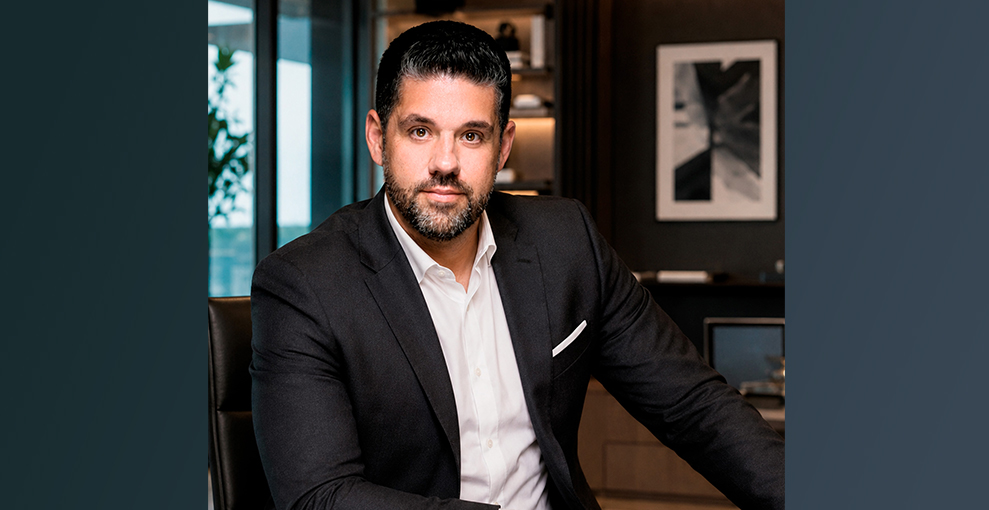
14 Jun Interview with Ryan j. Alvarez, CEO of Viva Bolivia
How do you see Bolivia’s potential as a telecom hub today?
Bolivia is in a unique position because there are only three telecom operators, so competition is strong but manageable. When we acquired the company four years ago, we saw a major opportunity: Bolivia’s economy is much stronger than it appears on paper because so much commerce still happens informally and in cash. The challenge is that cash-based economies limit growth, financial inclusion and access beyond local markets. Digitalization changes that. We saw huge potential in expanding digital transactions, improving banking access and delivering more stable connectivity. That is what motivated us to invest in Bolivia.
How will Viva Bolivia help connect remote areas that still lack coverage?
We are currently preparing a major network expansion plan. Since acquiring the company, we recognized that much of the infrastructure was outdated, so we are planning to invest roughly $350–400 million in Bolivia over the next five years. Our goal is to leapfrog existing technology by upgrading the network to advanced 4G infrastructure that is also ready for future 5G and beyond, without requiring full system replacements.
In rural areas, satellite connectivity will play a key role because Bolivia’s geography makes traditional infrastructure challenging. The demand is clearly there — Starlink, for example, has already added tens of thousands of users in just a few months, particularly in underserved regions. We are also seeing growing demand for digital services. Most users today rely on messaging, social media and basic browsing, but as Bolivia develops more digital commerce infrastructure, that will evolve quickly. Services like food delivery apps are already proving the market potential. We believe the opportunity is enormous, and our platform is built to support that growth.
You’re one of the three major players in the country and have the ALVA platform — what sets you apart from the others?
ALVA is the backend system behind our platform — a white-label super app designed for telecom operators globally. We originally built it about 10 years ago. My background is actually in marketing, not telecom. What we realized was that better use of customer data could dramatically improve digital performance beyond what existing advertising platforms were delivering. At the same time, our family business had spent decades building telecom infrastructure, including towers for companies like Telefónica in Mexico.
Around 10 years ago, we started noticing telecom operators struggling financially and we realized the real value wasn’t just in connectivity — it was in the digital ecosystem and the data layer behind it. That insight led to the creation of ALVA. The real money in telecom is in digital services — marketing, OTT platforms and the broader mobile ecosystem — not just basic connectivity, where operators earn only a few dollars per user. We built the ALVA platform and, after seeing resistance from other operators, we decided to acquire Viva to prove the model at scale. The super app replaces the traditional carrier self-service app and becomes a browser-based digital ecosystem. Users can top up, access social media, use a wallet and engage with fintech partners and local content providers. It also includes an ad exchange, marketplace revenue and even crypto and Web3 payment rails. The model is simple: users get a free, seamless experience while revenue comes from advertising, commerce and digital transactions.
Over time, the goal is to make connectivity effectively free and focus on enabling digital education and helping SMEs grow beyond their local markets. We also use AI and network data to improve targeting and user experience — not by overwhelming users with ads, but by showing the right product at the right time, based on real behavior and intent. That is what makes the platform fundamentally different from traditional advertising models.
How is your company helping businesses rethink how they work through digitalization?
We are working with the mayor’s office on initiatives like telemedicine and IoT and speaking with government stakeholders about potential blockchain applications for Bolivia’s lithium sector. A project in this area will be launched in the coming months. The focus is on transparency, trust and reducing corruption.
With blockchain-based smart contracts, all transactions and revenue sharing are fully transparent and automatically executed, making processes faster, fairer and easier to manage. The minister has been very open to collaboration and we have strong technical teams working on these initiatives. There will be several upcoming announcements as these projects develop.
How does Fundación Viva create hands-on social impact and link it to digital skills and innovation?
I am a board member of Fundación Viva, where we focus on practical, hands-on social impact. In rural areas, we run incubator programs that provide mentorship, training, internet access and basic tools like computers, often using our offices and co-working spaces as hubs. Our work supports at-risk youth, women and local communities in partnership with organizations like Pro Mujer and other NGOs. The goal is to create real, on-the-ground impact rather than traditional ‘formal’ philanthropy.
We also encourage employee volunteering in areas that matter locally, from hospitals and elderly care to animal shelters. Even small initiatives, like helping relocate a threatened shelter, often come directly from our teams.
More recently, we have also run hackathons through the ALVA platform and brought winners into internships, connecting social impact directly with digital skills and opportunity. The foundation is still growing, but it’s a core part of how we operate.
What is next for Viva Bolivia?
We launched the platform in a soft rollout last year and recently we ran a major campaign with artist Luis Vega. His content already reached over 7 million views in just a week, which has helped accelerate awareness significantly. The goal is to show what ‘free navigation’ inside a super app looks like and to get users engaging with the full digital ecosystem.
The next phase is education and partnerships — helping users and SMEs understand what they can do online, while expanding collaborations with large companies. We’ll be announcing several partnerships between now and August. Longer term, we see a major opportunity in B2B commerce in Latin America — something like an ‘Alibaba’ for the region — connecting strong local manufacturing with broader markets, since that infrastructure is still missing today.
Our holding has three main parts: Viva as the operator business, an MVNO (Mobile Virtual Network Operator) partnership in Mexico with ALTÁN RED, and plans for expansion into other markets. For the next two to three years, Bolivia remains my main focus because the network is critical — people only notice telecom when it fails. Our goal is to remove that pain point entirely and deliver a best-in-class experience that fully supports the digital ecosystem. ALVA is designed as the core platform powering that ecosystem — essentially a ‘Powered by ALVA’ solution that any operator can use. However, it only works if the network is strong, so we see the infrastructure as the foundation.
Bolivia is also our innovation hub, with our development team based in Cochabamba. The smaller competitive landscape allows us to move faster and experiment more freely than in larger markets like Mexico. That combination of strong local talent and flexibility makes Bolivia an ideal environment for us to keep innovating and building new digital services.
What is your final message?
Bolivia is increasingly open to investment under the new government. There is a clear focus on improving outcomes for the population while still welcoming sustainable, profit-driven business. Companies are encouraged to create real local impact, not just extract value. This is a noticeable shift from previous years, based on my experience over the past four years. Today, the emphasis is on partnership and long-term development and investors who align with that approach are strongly supported. That environment is what makes it possible for us to plan nearly $400 million in investment and engage with multiple partners. For us, it’s a strong signal that we are moving in the right direction.
Sorry, the comment form is closed at this time.